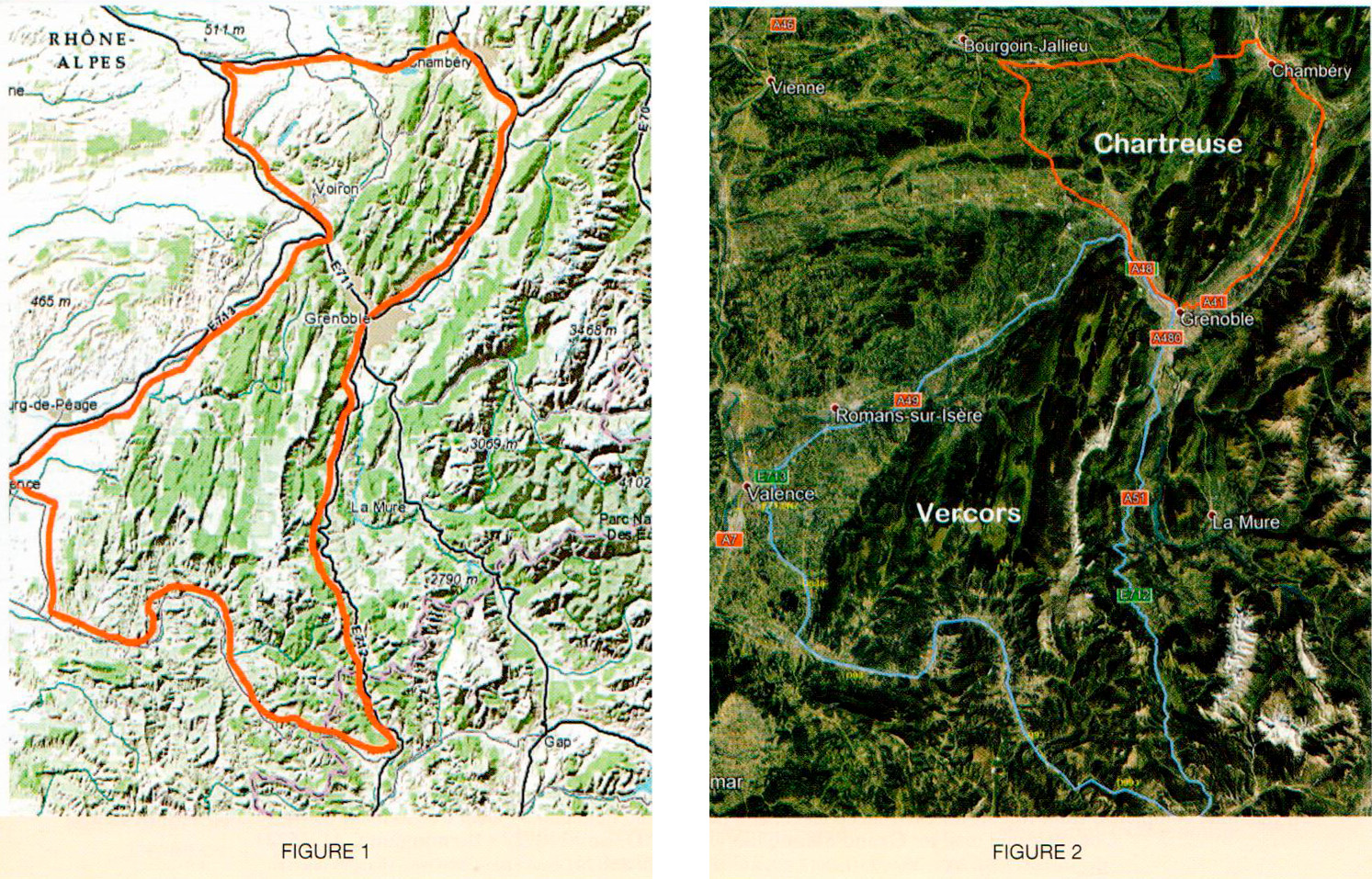
Since the spring of 2020, the GSCO / Grand Slam has differentiated the Chartreuse Chamois from the Vercors Chamois (cf GSCO: spring review 2020, number 192, pages 45 & 46). The GSCO has therefore defined an appellation area as follows:
- To the south of the A48 motorway;
- To the west of the A51 motorway’s E712 main artery;
- To the north of the D993 / D93 / D538 departmental roads;
- To the east of the D5838 departmental road and then the A49 motorway.
We hunt it especially on the cliffs that form the contour of the Vercors plateau, so we have to pay attention when firing: we have to be able to go to fetch it on its ledge in the cliff and take all necessary precautions for it not to slip and fall from the cliff; there’s a real risk of damaging the trophy. During the autumn of 2021, I had to use rope descent techniques (as in mountain-climbing) to retrieve the chamois of my hunter who had indeed made a superbly powerful shot, but the chamois had slipped and fallen from the first ledge. This chamois lives in the meadows above the forests and especially in the cliffs, for as the VERCORS is among the sectors in France that has one of the densest wolf populations, it’s one of its means for protection.
Summary / key points:
Game that’s 100% natural, access to selected territories;The experience of the guides from HUNT IN FRANCE;
Strict respect of the appellation area of the GSCO (USA) and of the KGO (Russia);
Upon request by collectors, you leave with a certificate of origin;
Firing distances from 80 to 250 meters;
We leave for the whole day, with packed meals;
Average gradient: 500m;
For collectors, near to the Chartreuse;
In some sectors we can observe the Alpine ibex
Natural history:
French name: chamoisLatin name: Rupicapra rupicapra vercors
Reproduction: rut from mid-October to the end of November or the beginning of December.
Parturition: May to June, gestation time: 23 weeks.
Géolocalisation